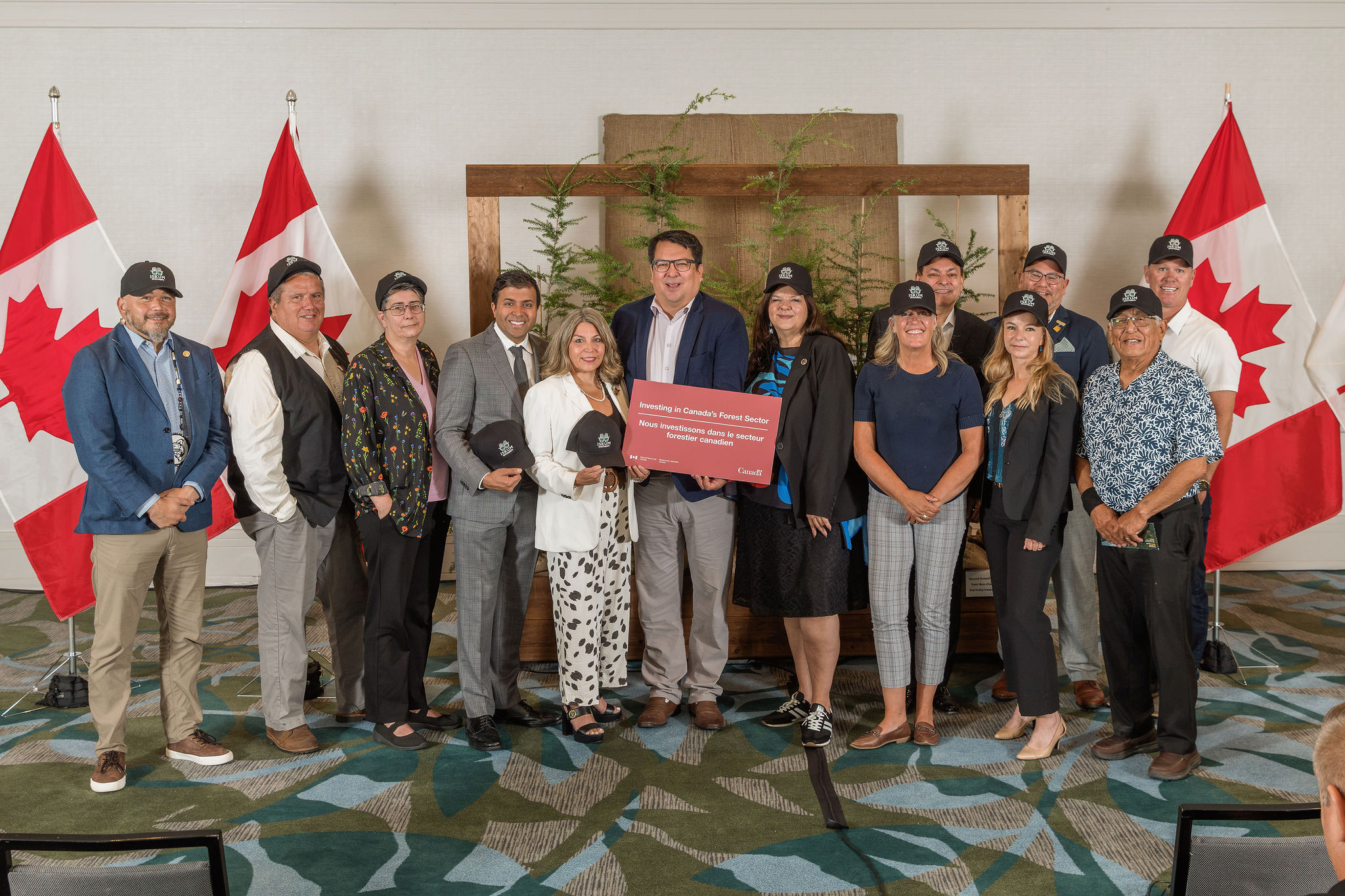
On August 4, 2026, Iskum Investments announced that it is studying a new, state-of-the-art wood processing facility on the British Columbia coast, built for second-growth logs. That work is underway now. Preliminary facility design has been developed with leading equipment suppliers, three coastal locations are under comparative analysis, and fibre supply from participating Nations is in discussion.
The last few years have been hard years on this coast. Curtailments and closures have taken work from people who have given their lives to this industry, and tariffs and global uncertainty have made an already difficult situation harder. Our thoughts are with every family affected, and with the communities that feel it long after the news moves on.
The industry is facing a crisis, and the response is not doing nothing and waiting it out. The structural problem with the forest sector predates the current United States trade dispute. The coast’s future relies on harvesting and manufacturing second growth. But, many of the existing manufacturing facilities were built for a forest that is no longer available at the scale needed, and the underutilized species are left unharvested or exported out of Canada unprocessed. Modern, state-of-the-art manufacturing capacity, like that of the world’s most competitive jurisdictions, is what is required to move the sector from one that is in decline to a sector with a resilient future.
A facility of this kind would provide and sustain resources and work well beyond the facility itself. Downstream, it would provide chips and residuals to pulp and paper operations, and upstream, it would provide work to the loggers, contractors, truckers and suppliers whose families live and work in rural coastal communities, Indigenous and non-Indigenous alike.
Today, First Nations forest businesses on this coast are acutely feeling the turmoil in the industry. They are predominantly tenure holders with limited or no investment in manufacturing, and many of those tenures were acquired through ordinary commercial transactions. They are Canada’s newest tenure holders, and they are absorbing the full weight of tariffs, recent curtailments and global uncertainty without the manufacturing base that most tariff response programs are built around.
When a mill curtails or closes, the tenure holders and contractors who supplied it lose their market. These are the same businesses putting their own capital into Iskum’s work, rooted in their territories and will remain long after private industry leaves. If Iskum’s wood processing facility study passes the diligence tests ahead of it, a facility still must be financed and built, and that takes time. We are putting practical measures to the governments of British Columbia and Canada to sustain them in the meantime, so that the businesses meant to supply and one day own the next generation of coastal manufacturing are still operating when it opens.
A facility of this kind is a major capital investment, and it requires rigorous diligence. Our analysis must demonstrate that it can operate through the whole market cycle, serving Canadian and international markets alike.
We stand with the workers and communities carrying the weight of this moment, and with Canada, in doing our part: committed to investing in infrastructure, when diligence proves it viable, that diversifies British Columbia’s economy, opens coastal wood to international markets through Canada’s west coast ports, and strengthens our country for the benefit of all.
Media contact: Samantha Haugen – samantha@munrothompson.com / 250-731-9254